
Vet care
What Should Dogs and Cats Eat in Cold Weather?
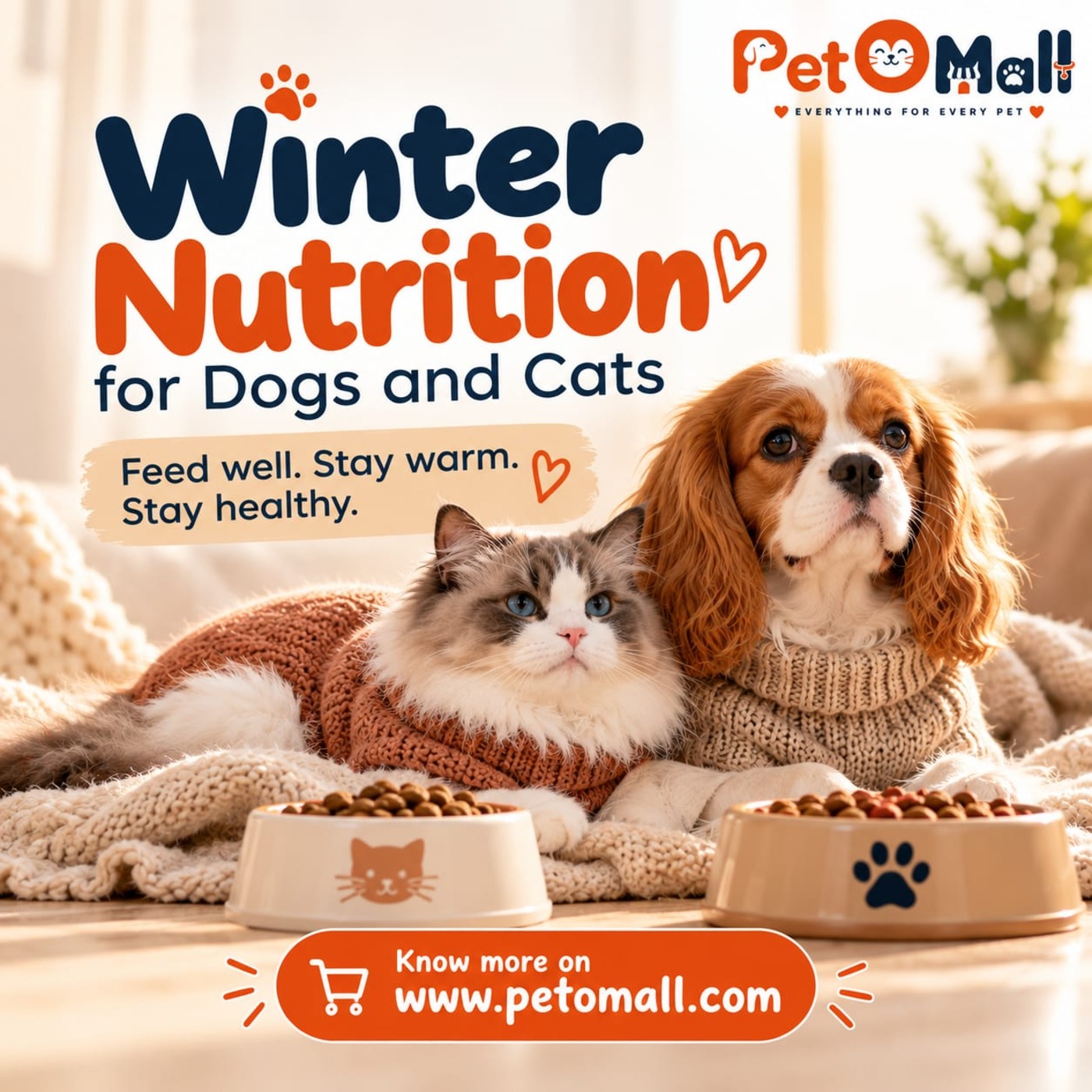
Wondering what to feed your pets during winter? Discover the best foods for dogs and cats, seasonal feeding tips, hydration advice and foods to avoid for a healthy winter.
Winter brings cooler mornings, cosy blankets and changes in our daily routines. Just like humans, dogs and cats may experience changes in their appetite, activity levels and hydration needs during colder weather. Providing the right nutrition during winter is essential to maintaining their energy, immunity and overall well-being.
At Petomall we believe that healthy pets begin with informed pet parenting. Here is how you can support your furry companions through the winter season.
1. Choose a Balanced and Nutritious Diet
During winter, pets need a complete and balanced diet that provides essential proteins, healthy fats, vitamins and minerals. Protein supports muscle health, while healthy fats provide energy and help maintain healthy skin and a shiny coat.
Choose high-quality dog or cat food according to your pet's age, breed, weight and activity level. Avoid increasing food portions unnecessarily, as indoor pets may become less active during colder months.
2. Include Healthy Protein Sources
Protein plays an important role in maintaining muscle strength and supporting overall health.
For dogs, suitable options may include properly cooked chicken, eggs and fish, provided they are prepared without salt, spices, bones or added oil.
Cats are obligate carnivores and require animal-based protein in their diet. Always choose nutritionally complete cat food rather than relying on homemade meals alone.
3. Don't Ignore Hydration
One common winter mistake is overlooking water intake. Pets may drink less water when the weather becomes cooler, increasing the risk of dehydration.
Keep fresh drinking water available throughout the day. Wet food can also help increase moisture intake, particularly for cats.
4. Support Healthy Skin and Coat
Cold weather and indoor heating can contribute to dry skin and a dull coat. Nutrients such as omega-3 and omega-6 fatty acids support skin and coat health.
Include veterinarian-approved nutritional options and avoid giving supplements without professional advice.
5. Choose Pet-Safe Winter Treats
Treats can be part of your pet's winter routine. Small portions of plain cooked pumpkin, carrots or other veterinarian-approved treats can add variety. Avoid chocolate, grapes, raisins, onions, garlic and foods containing xylitol, as these can be harmful to pets.
6. Consult Your Veterinarian
Every pet has different nutritional requirements. Puppies, kittens, senior pets and those with existing health conditions may need specialised diets.
Winter nutrition is not about feeding more; it is about feeding smarter. With balanced meals, proper hydration and regular veterinary guidance, you can help your dogs and cats stay healthy, active and comfortable throughout the season.
Petomall – Everything Your Pet Needs, All in One Place!